"With the advancement of Taiwan's dual legislation on regenerative medicine in 2026 and the approval by the Ministry of Health and Welfare for 'Human Cell-Derived Exosomes' as a cosmetic ingredient, exosomes (Exosome) have become pivotal in precision skincare. This article provides an in-depth analysis on how consumers can select safe and compliant exosome products."
What are exosomes
"Exosomes are tiny vesicles secreted by cells, measuring only about 30-150 nanometers in diameter, acting as 'messengers' between cells. By 2026, their applications are expected to see significant advancements, withmesenchymal stem cell (MSC)-derived exosomes garnering the most attention. The market has already evolved from plant and animal sources to 'human-derived' materials with high biocompatibility, especially those reviewed and approved by the Ministry of Health and Welfare, ensuring the purity and safety of the contained growth factors and cellular signals."
Features of exosomes
• Small particlesEasy to absorb
Due to their nanoscale size of approximately 50-200 nm, exosomes are easily absorbed by cells. Their bilayer lipid membrane structure allows them to effortlessly penetrate the skin's epidermal layer, enabling the skin to absorb nutrients more effectively.
%%
When exosomes are released by cells like bubbles, they act as "couriers," delivering the instructions they carry to other cells. This enables the recipient cells to perform various functions.
%%
Excellent biocompatibility
%%
Tissue compatibility
%%
Superior reparative power
• Good biocompatibility
Exosomes can promote skin repair, enhance hair volume, and aid in wound healing as well as restoring skin elasticity.
• Excellent restorative power
Exosomes can provide skin repair, hair thickening, and help wounds heal and restore skin elasticity.
Functions and Applications of Exosomes
Exosome research and development is a relatively new technology. Studies have found that exosomes possess various functions such as cell activation, immune regulation, and repair. As they are derived from cells, the risk of rejection is minimized, making their applications broader and safer. Below are the current functions and application areas of exosomes:
Delay aging and anti-aging
Exosomes contain abundant growth factors and other components that can activate fibroblasts, maintaining skin elasticity, health, and a youthful texture.
Since exosomes can accelerate the healing of skin wounds and regulate cells to reduce scar formation, they also play a role in strengthening hair roots for hair growth.
Exosomes can activate stem cells and promote tissue growth, possessing broad potential for clinical applications.
Immunomodulation, disease treatment
The outer membrane of stem cells contains various cytokines. When damaged cells send out distress signals, the stem cells receiving these signals will either through homing or the paracrine effect, deliver exosomes carrying nutritional factors to the targeted damaged cells, thereby exerting therapeutic effects.
Exosomes, with their small particle size and the characteristics of a bilayer lipid membrane and surface proteins, can cross the blood-brain barrier that most drugs cannot penetrate. They protect the carried anticancer drugs from degradation and precisely deliver them to target cells, enabling targeted treatment for brain cancer or other cancers.
Reference materials:
Stem Cells Transl Med. 2020 Apr; 9(4):499-517.
Sci Adv. 2022 Jan 14;8(2):eabi9617.
Sci Rep. 2020 Sep 3;10(1):14521.
Bone Res. 2020 Jun 19;8:25.
J Cosmet Dermatol. 2022 Feb;21(2):844-849.
Derm Venereol. 2020. 100. adv0031.
Chembiochem. 2019 Feb 15;20(4):451-461.
What are the sources of exosomes?
Exosomes
Depending on their origin, they can be categorized into various types, each with distinct research backgrounds and application directions.
Common sources of exosomes include:
Human-derived exosomes:
Exosomes secreted from human cells have higher requirements for source, production process, and safety, and related applications must comply with regulatory standards set by authorities.
Animal-derived exosomes:
Derived from mammalian animal cells, they require management and regulation according to relevant laws and standards.
Plant-Derived Extracellular Vesicles:
Derived from plant cells, research and applications are primarily focused on plant-based skincare concepts, with diverse sources that vary depending on raw materials and production processes.
Exosomes from different sources vary in regulatory oversight, manufacturing standards, and application conditions. When selecting, consumers are advised to prioritize transparency of origin and compliance with current regulations.
Legality and Government Approval of Human-Derived Exosomes
With the advancement of exosome research, the legality and usage regulations of human-derived exosomes have become a major focus for both consumers and medical professionals.
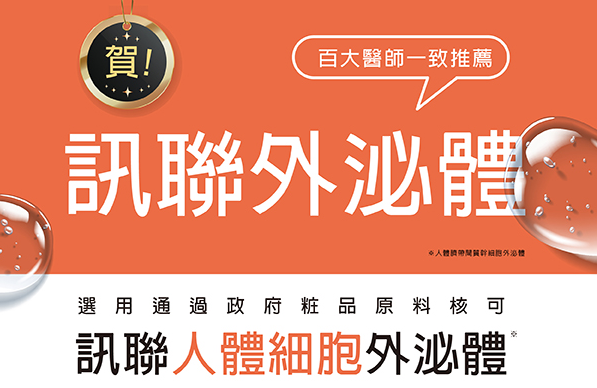
The human umbilical cord mesenchymal stem cell exosomes from Bionet Corporation have obtained approval from government regulatory authorities, qualifying them for use as cosmetic ingredients.
This approval signifies that the component meets current regulatory standards in terms of source management, manufacturing conditions, and safety assessments, and can be legally applied in cosmetic-related products.
Government approval does not claim the product's effectiveness but confirms the eligibility of ingredients and regulatory compliance, providing consumers with a more reassuring basis for choice.
Why choose human exosomes?
Compared to other sources, human exosomes require more stringent source control and regulatory compliance in research and applications.
For those who prioritize ingredient safety, source transparency, and professional background, the legality and manufacturing management of human exosomes serve as crucial reference points.
In related applications, whether government-approved and whether possessing complete regulatory and technical documentation are often key factors for consumer evaluation.
Why choose Bionet for exosomes?
Endorsed by Hundreds of Medical Professionals
For nearly 30 years, Sinocelltech has been deeply engaged in regenerative medicine, collaborating with hundreds of physicians to accumulate and share clinical expertise, helping consumers understand exosome-related applications from a medical perspective.
Regulatory and Technical Certifications
Human-derived exosome ingredients are government-approved, concurrently registered with international INCI, and backed by multiple patented technologies, ensuring compliant sourcing and manufacturing processes.
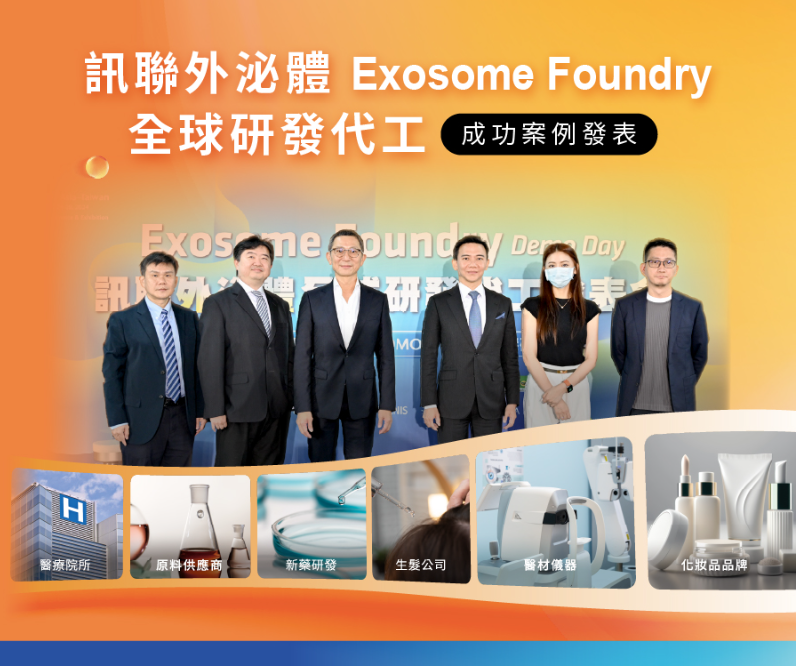
Exosome Foundry Global R&D Center and World Factory - Building the Golden Era of Exosomes
Since 2002, Signal*** has been at the forefront of exosome research, leading the charge in the exosome market. Today, through international brand collaborations combined with localized and customized services, it has launched the new business model of "Exosome Foundry Global R&D Contract Manufacturing," attracting nearly a thousand domestic and international businesses and institutions to join forces. The aim is to enhance product value through various exosome applications, drive industry upgrades, and collectively accelerate the realization of a trillion-dollar biotechnology industry.
Multicomponent, Performance Optimization
複方成分,超越單一細胞來源(Exosomes source mix, Exosomes + additive /protein)
Customized Regulatory Patents
Regulatory Patents, Gene Editing, and Active Targeting
Smart Manufacturing Process, Mass Production Technology
1. Exclusive collaboration with Korea (MEMS) to develop a more effective purification system for isolating high-quality exosomes
2. Pioneering a one-stop production process that integrates bioreactors, continuous centrifugation, TFF concentration, automated filling systems, and high-yield exosome production.
3. Wet Lab & Dry Lab conduct bidirectional validation/verification simultaneously for indications, ensuring source-controlled ***ization.
Quality control,Qualitative and quantitative,Comprehensive analysis and testing
Comprehensive quality analysis and testing: Standardization of particle size, purity, concentration, associated proteins, and miRNA detection.
25 years of clinical technology commercialization, with multiple international certifications: GMP/ISO22716, INCI Name, AABB, GTP, and more
訊聯Exosome Foundry 全球研發代工
再生醫療雙法通過,帶動產學研醫界積極跨入外泌體領域。訊聯董座蔡政憲振奮表示「此刻正是台灣絕對不可錯過的外泌體大時代!」,因此,憑藉25年再生醫學經驗,訊聯擘劃外泌體全球研發代工「Exosome Foundry」新產業服務模式,將過去創造科技業大成功的台積電晶圓代工(Foundry)模式,以及輝達為各行各業AI化的「AI Foundry」創新服務,帶到臨床醫療層次。為醫界、醫材、新藥開發、保養品等各大行業,結合AI分析模擬技術,打造次世代外泌體新療程、新應用,讓各行各業都能受惠於外泌體,與世界同步升級。
蔡政憲表示, Exosome Foundry可帶動外泌體應用的極大化,藉由友善的法規、高規格的製備,為各行各業、醫療各科別領域同步革新、升級,並將台灣外泌體推升成為全球耀眼的下一個強勢產業!就像輝達AI Foundry宣示,不再只是一個GPU晶片的供應商,而是要幫助全球機器人、醫療器材、光學、手機等各行各業AI 化,讓AI商機加速擴大百倍、千倍。
FAQFrequently Asked Questions
Q1: Are human exosomes legal?
Yes, they are legal. Starting from 2026, as long as they pass the case review by the Ministry of Health and Welfare and obtain an approval number, "Human Cell-Derived Exosomes" can be legally used in cosmetics, with safety and stability far surpassing those from unapproved sources.
Q2: What is the difference between exosomes and stem cells?
Exosomes are the "essence" secreted by stem cells, containing no cells themselves, thus posing no rejection risk. With smaller molecules, they are more suitable for non-invasive maintenance and hair regeneration applications.
Q3: Are human exosomes the same as medical-grade exosomes??
Not the same. Human exosomes used in cosmetics must comply with cosmetic regulations and must not involve medical use or efficacy claims.
Q4: What does government approval signify?
Government approval indicates that the ingredient meets current regulatory standards in terms of source, manufacturing process, and safety management, and can be legally applied in related products.
Q5: How to determine if human exosomes are trustworthy?
Consumers can evaluate based on factors such as the professional background of physicians, regulatory certifications, and transparency of ingredient sources as reference points for selection.
Q6: Can all products claim to contain exosomes?
Not all products can make claims arbitrarily; they must comply with relevant regulations and meet the approved ingredient and labeling requirements set by authorities. Plant-derived products should not be directly labeled as "exosomes" but rather referred to as "extracellular vesicles" or "extracellular vesicles (Extracellular Vesicles)."
※The exosome products from Singoen are only for use on the skin or hair, and should only be applied by dripping, spreading, or topical application. Intravenous reinfusion is strictly prohibited.