





Alternative Name: Hydrating Peptide
CAS Number 1447824-16-9
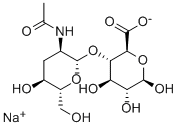
Amino acid sequence: Asp-Ser-Pro-Ala-Gly-Gly-Pro-NH₂
Molecular formula: C₂₂H₃₃N₇O₉
Molecular weight: 539.55 g/mol
Appearance: White to off-white lyophilized powder
Solublity: Water-soluble, readily soluble in aqueous formulations.
Purity ≥95% (HPLC)
Storage Conditions: Lyophilized powder should be stored sealed and protected from light at 2–8°C; after dissolution, the solution should be divided into portions and stored at –20°C, avoiding repeated freeze-thaw cycles.
Appearance: white fine powder
Package:100g per bag or bottle
Quality validity: 2 years
MOQ 100G
Acetyl Hexapeptide-37 — The Hydration Peptide
A bioactive acetylated hexapeptide (Ac-Ser-Pro-Ala-Gly-Gly-Pro-NH₂) that enhances Aquaporin-3 (AQP3) expression, promoting deep water transport from the basal layer to the stratum corneum for lasting hydration. It boosts collagen I synthesis and keratinocyte proliferation to visibly reduce fine lines, while reinforcing the skin barrier and calming inflammation. Non-comedogenic (rating: 0/5), water-soluble, and suitable for all skin types including sensitive skin.
Core Efficacy
Deep hydration – Activating aquaporin AQP3
This represents the most fundamental differentiated efficacy of acetylhexapeptide-37.It enhances the expression of aquaporin-3 (AQP3) in the skin, facilitating the transport of water from the epidermal basal layer to the stratum corneum, thereby achieving deep hydration from within.In vitro studies have demonstrated that this peptide effectively enhances the expression level of AQP3 at the mRNA level, increasing skin moisture content by approximately 20–30%.
Promote collagen synthesis and cell proliferation
It promotes the synthesis of type I collagen in dermal fibroblasts and enhances the proliferation of keratinocytes, thereby helping to reduce fine lines, improve skin elasticity and firmness, and achieve skin rejuvenation.
Repair and strengthen the skin barrier
It promotes the synthesis of intercellular lipids (such as ceramides, cholesterol, and fatty acids), enhances the stability of the "brick wall structure," reduces transepidermal water loss (TEWL), and improves the skin's resistance to external harmful substances such as ultraviolet radiation and pollutants.
Anti-inflammatory and soothing
By inhibiting the NF-κB signaling pathway and reducing the release of inflammatory mediators such as interleukin-1 (IL-1), interleukin-6 (IL-6), and tumor necrosis factor-α (TNF-α), it alleviates discomfort symptoms including skin redness, swelling, itching, and stinging sensations, making it suitable for use on sensitive skin.
Highly safe, mild, and non-irritating
The cosmeceutical safety rating is 0/5 (the lowest). This water-soluble small-molecule peptide does not clog pores and contains no irritating chemicals, making it suitable for all skin types including sensitive skin.Non photosensitive; does not increase the risk of skin sunburn.
Reference proportions for addition to cosmetics
Drug dosage form | Recommended Addition Amount | explain |
Serum/Ampoule | 0.5% to 2% (based on solution-type raw materials) | High-concentration moisturizing essence with efficacy-oriented formulation |
Face Cream/Lotion | 0.5% to 1.5% (based on solution-type raw materials) | Daily moisturizing care products |
eye cream | 0.5% to 1% (based on solution-type raw materials) | For addressing the need to reduce dryness and fine wrinkles around the eyes |
Mask (patch/wash-on type) | 1% to 2% (based on solution-type raw materials) | Intensive moisturizing care |
Note: The above addition amounts represent the recommended ratios for solution-based raw materials (typically containing active peptides at specific concentrations).When using lyophilized powder as the raw material, the final concentration of active peptides should be adjusted according to actual purity; generally, a final concentration within the range of 10–200 ppm is sufficient to achieve therapeutic efficacy.
Applicable Product Types
Moisturizing essence, cream, lotion
Eye cream, neck cream
Mask (patch-type/moisturizing type)
Body Lotion/Body Care Products
Sensitive Skin Repair Products
Post-repair products for medical art treatments
Moisturizing foundation product for use before makeup application
Formulation Precautions
Administration timing: Add during the final stage of cosmetic production (low-temperature phase/cooling phase), with temperature not exceeding 40–45°C, to avoid peptide chain degradation caused by high temperatures.
pH range: The recommended formulation pH should be controlled between 5.0 and 7.0.
Contraindications: Avoid concurrent use with products having extremely low pH values (high concentrations of fruit acids/salicylic acid), as this may reduce the efficacy of peptides and cause mild irritation.
Synergistic ingredient recommendation: Can be used in combination with hyaluronic acid, ceramide, nicotinamide, collagen peptides, coenzyme Q10, etc., to achieve a synergistic effect.
Dissolution method: First completely dissolve the lyophilized powder in a small amount of pure water or buffer solution, then add it to the formulation and stir thoroughly.