





L-Carnosine
1、 Product basic file
Chinese name: L-Carnosine/Carnosine
English name: L-Carnine/Carnosine
Nicknames: β - Propionium-L-Histidine, Carnot Ignotine、Karnozin、Dragosine
INCI Name: CARNOSINE
CAS number: 305-84-0
EINECS number: 206-169-9
COSING REF No:55088
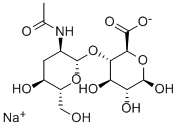
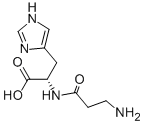
Molecular formula: C ₉ H ₁ N ₄ O ∝
Molecular weight: 226.23 g/mol
Structural features: A natural dipeptide formed by the condensation of β - alanine (β - Ala) and L-histidine (L-His) through peptide bonds. It is another important natural non enzymatic free radical scavenger discovered after SOD and vitamin E
Appearance: White to off white crystalline powder
Odor: Odorless
Melting point: 253 ℃ (decomposition)
Specific rotation: [α] D ² ⁵=+21.0 ° (c=1.5, H ₂ O)
Density: 1.2673 g/cm ³ (calculated value)
Boiling point: 367.84 ℃ (estimated value)
Vapor pressure: 0 Pa (25 ℃)
LogP: -3.8 (Strong hydrophilicity)
pKa:pK₁ = 2.64,pK₂ = 6.83,pK₃ = 9.51(25℃)
Solubility:
Water: soluble (1g dissolved in approximately 3.1 mL of water at 25 ℃; About 45 mg/mL)
DMSO: Slightly soluble
Ethanol and ether: insoluble
Stability: Relatively stable to heat (activity retention>90% after heating at 120 ℃ for 1 hour), stable within the pH range of 3.0-9.0; Incompatible with strong oxidants
Storage conditions: Powder state can be stored for 3 years at -20 ℃, and for 2 years at 4 ℃; After preparing the solution, store it at -80 ℃ for 6 months and at -20 ℃ for 1 month
Purity specification: ≥ 98%~99% (HPLC)
INCI functional classification: Skin Conditioning, Antioxidant
Regulatory status: Listed in China's "Catalogue of Used Cosmetic Raw Material Names (2015 Edition)", serial number 03150; TSCA listed
2、 Core efficacy and mechanism of action
L-Carnosine is a physiologically active dipeptide widely present in animal tissues such as muscle, brain, heart, skin, and kidneys, with concentrations up to 20 mmol/L in human muscle and brain tissues. It is one of the most important buffering substances in the cytoplasm of the human body, and typically 60% of the total buffering capacity in the body is provided by myopeptides. As age increases, the level of creatine in the body significantly decreases, which is closely related to increased oxidative stress and aging process.
Its core efficacy and mechanism of action are mainly reflected in the following dimensions:
Anti glycation effect (core efficacy): The molecular structure of myopeptides is similar to that of glycation sites on proteins, with structural features similar to proline lysine peptide segments. They can competitively react with aldehydes and ketones, replacing protein and sugar reactions, thereby reducing the formation of advanced glycation end products (AGEs). Carnosine can not only inhibit protein glycation, but also reverse the formed glycated proteins through the "anti glycation" mechanism - by nucleophilic attack on pre formed aldosamines (such as glucose lysine), forming glycosylated myopeptides. In addition, myopeptides can also clear the precursor of AGEs - reactive carbonyl compounds (RCS), blocking the glycation reaction chain from the source. In vitro experiments have confirmed that the inhibition rate of creatine on AGEs formation can reach 78%.
Strong antioxidant effect: Carnosine can encapsulate various free radicals (hydroxyl radicals, superoxide anion radicals, lipid peroxidation radicals, singlet oxygen, DPPH, etc.) in its molecular cavity to form stable adducts, exhibiting strong ability to capture free radicals. Meanwhile, myopeptides can chelate metal ions (copper, zinc, iron, etc.) and inhibit oxidation reactions catalyzed by metal ions (such as lipid peroxidation initiated by divalent iron ions). Carnosine can also regenerate oxidized antioxidants such as vitamin C and vitamin E, prolonging their action time. Clinical data shows that the use of formulations containing myopeptides can reduce skin lipid peroxidation levels (MDA) by 40% to 60%.
Anti photoaging and photoprotective effects: Carnosine can reduce UV induced ROS production, downregulate the expression of matrix metalloproteinases (MMP-1, MMP-3, MMP-9) to prevent collagen degradation, increase mRNA expression of type I and III procollagen to promote collagen synthesis, and protect Langerhans cells to maintain skin immune function. Clinical studies have shown that volunteers who use a 0.5% carnosine solution before and after UVB irradiation experience a 3.6% reduction in erythema at the irradiated site, demonstrating significant photoprotective effects.
Whitening and spot lightening effect: Carnosine can inhibit tyrosinase activity and reduce melanin synthesis. In vitro experiments have shown that when the concentration of myopeptide is 1 mmol/L, the inhibition rate of tyrosinase is 21.25%, and the higher the concentration, the stronger the inhibitory effect. At the same time, reducing post inflammatory pigmentation through antioxidant effects has been clinically shown to have a certain improvement effect on melasma and senile plaques.
Anti inflammation and repair: Carnosine reduces the release of inflammatory factors (TNF - α, IL-6) by reducing oxidative stress, alleviating skin redness and irritation. In addition, myopeptides can stabilize cell membranes, protect mitochondrial function, inhibit caspase-3 activity to reduce cell apoptosis, enhance DNA repair enzyme activity, and comprehensively maintain skin cell health.
Comprehensive anti-aging effect: Multiple clinical studies have confirmed that after local use of formulations containing 1% to 2% L-carnosine for 4-12 weeks, the average depth of facial wrinkles is reduced by 15% to 25%, skin elasticity is increased by 18% to 30%, and the content of AGEs in the skin is reduced by 20% to 35% and skin yellowing is reduced by 36% after 3 months of use.
3、 Recommended addition ratio and application scenarios
L-carnosine is a water-soluble small molecule dipeptide with excellent formula compatibility, which can be added to a variety of skin care formulations such as essence liquid, face cream, facial mask, eye cream, sunscreen products, etc.
Recommended addition ratio:
General recommendation range: 0.05% to 2% (calculated as pure peptide)
Recommended dosage from raw material supplier: 100 ppm to 500 ppm (0.01% to 0.05%), suitable for basic skincare products
Anti aging essence: 1%~3% (pre dissolved in water phase)
Anti sugar facial mask: 2%~5% (directly added to the mask essence)
Daily skin care products (face cream/lotion): 0.5%~1%
Eye care products: 0.5% to 1%
Oral beauty products: 0.5% to 1% (food grade specifications)
Application Scenario:
Anti aging skin care products: use its dual mechanism of anti saccharification and anti-oxidation to protect collagen and elastin from AGEs and free radicals, apply it to facial essence, face cream, eye cream and other products, and improve wrinkles, relaxation and skin elasticity.
Anti saccharification special product: develop anti saccharification essence or facial mask for the dark yellow, rough and elastic loss of skin caused by saccharification, and use the competitive inhibition of carnosine and the reverse mechanism of anti glycosylation to restore the skin's transparency and luster.
Whitening and spot lightening products: using its dual whitening mechanism of inhibiting tyrosinase activity and antioxidant, it is applied to spot lightening essence and skin smoothing products.
Sunscreen/post sun repair products: Utilizing their light protection and anti-inflammatory repair abilities, applied in daily sunscreen formulas or post sun repair products to reduce UV damage.
Anti pollution skincare products: Utilize their strong free radical scavenging ability to protect the skin from oxidative damage caused by environmental pollution (PM2.5, ozone, etc.).
Sensitive Skin Soothing Products: Utilizing their anti-inflammatory and skin conditioning functions, applied to sensitive skin specific products to reduce redness, swelling, and irritation.
4、 Formula recommendations and safety compliance
Compatibility and process suggestions:
Dissolution method: Carnosine has good water solubility and can be directly dissolved in aqueous systems. It is recommended to add it during the aqueous phase of the formula
PH range: Stable range pH 3.0~9.0, suitable for the vast majority of cosmetic formula systems
Thermal stability: After heating at 120 ℃ for 1 hour, the activity retention is>90%, and there is no need to avoid heat in the formulation process
Efficiency enhancing combination:
Compound with Decarboxylate HCl: Decarboxylate is not broken down by myopeptidase, has higher bioavailability, and can also reverse glycated proteins. The combination of the two (myopeptide 2%+decarboxylated myopeptide 1%) can form a "long-lasting+quick acting" synergistic anti glycation scheme
Compound with ergotamine: ergotamine provides antioxidant protection at the mitochondrial level, while carnitine clears free radicals at the cytoplasmic level, forming a dual pathway antioxidant+cell protection scheme (carnitine 2%+ergotamine 0.5%)
Combined with vitamin C/E: Carnosine can regenerate oxidized vitamin C and E, prolong their antioxidant activity time, and form a circulating antioxidant system
Compound with retinol: retinol promotes collagen synthesis and cell renewal, while myopeptide protects collagen from glycation and oxidative degradation, forming a synergistic scheme of "promoting synthesis+preventing degradation"
Compound with Niacinamide: Niacinamide is responsible for pigment management and barrier repair, while Carnosine is responsible for anti glycation and antioxidant effects. The two work together to improve dull skin tone and aging
Safety compliance:
L-Carnosine is a naturally occurring dipeptide in the human body, with excellent biocompatibility and high safety
Oral LD ₅₀ (rat)>5000 mg/kg is considered a practically non-toxic substance; Oral LD ₅₀>14930 mg/kg in mice
0.5% to 2% concentration has no irritation to intact or damaged skin, and 1% solution has no irritation to rabbit eyes
Non comedogenic, suitable for acne prone skin
No mutagenicity (Ames test negative), no phototoxicity and photosensitivity
EWG (Environmental Working Group) rated as safe level
Listed in China's "Catalogue of Used Cosmetics Raw Material Names (2015 Edition)" with serial number 03150, in compliance with domestic cosmetics regulatory requirements
A very small number of sensitive skin may experience a slight and brief stinging sensation. It is recommended to start using at low concentrations (0.5%)
5、 Application Fields and Market Supply
L-carnosine, as a classic "anti glycation+antioxidant" dual effect dipeptide, is widely used in cosmetics, health products, and pharmaceuticals.
Research and development background: Carnosine was first isolated and discovered by Russian chemist Gulewitsch from beef extract in 1900. In the 1980s, British biochemist Dr. Alan Hipkiss discovered that it could prolong cell lifespan. In 1992, when studying the complications of diabetes, the University of Sydney further revealed its anti glycosylation properties, opening a new dimension of anti-aging research. Subsequently, numerous studies have confirmed the multiple biological activities of myopeptides in antioxidant, anti glycation, neuroprotective, and cardiovascular protection.
Product positioning: L-carnosine is a naturally occurring dipeptide that combines five functions: anti glycation, antioxidant, anti-inflammatory, whitening, and photoprotective. It is one of the few "full effect" active ingredients in skincare products. Its advantages lie in natural sources, low molecular weight (easy to penetrate), good water solubility (formulation friendly), good thermal stability (process tolerance), and extremely high safety.
Benchmark product application: L-carnosine has been widely used in international brand skincare products, including EltaMD UV AOX Elements SPF 50 (sunscreen+antioxidant), Neocut LUMIERE FIRM RICHE eye cream (anti-aging and firming), ISDIN Age Contour (anti-aging), etc.
Cross disciplinary applications: In addition to cosmetics, L-carnosine is also widely used in the fields of food and health products (oral anti-aging supplements), pharmaceuticals (zinc carnosine is used to treat gastritis and gastric ulcers and has been approved for marketing in Japan), and sports nutrition (muscle buffering and anti fatigue).
Market prospects: With the continuous rise of the concept of "anti glycation", consumers' demand for scientific anti-aging is increasing. L-carnosine, with its clear target mechanism (competitive anti glycation+multi pathway antioxidant), rich clinical data support, extremely high safety, and affordable price, occupies an irreplaceable position in anti-aging skincare formulas and is currently one of the most cost-effective anti glycation ingredients.