





Trade name Matrixyl 3000 (when combined with palmitoyl tetrapeptide-7)
Aliased names: Pal-GHK, Collagen Peptide II, Elastin Peptide CL, Palmitoyl Oligopeptide
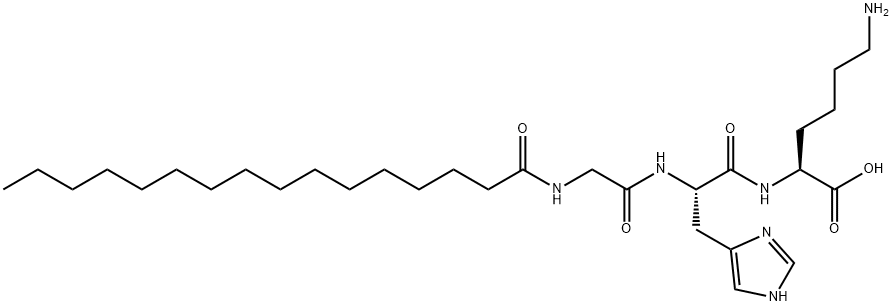
Amino acid sequence: Pal-Gly-His-Lys (palmitoyl-glycine-histidine-lysine)
Molecular formula: C₃₀H₅₄N₆O₅
Molecular weight: 578.79 g/mol
Isoelectric point (pI): 8.66
Appearance: White to off-white lyophilized powder
Solubility: Microsoluble in water; soluble in ethanol (30 mg/mL), DMF (30 mg/mL), and DMSO (10 mg/mL).
Purity ≥95%–98% (HPLC)
Storage conditions: Lyophilized powder – store at-80°C for 2 years or at-20°C for 1 year; after dissolution, aliquot and store at-20°C, avoiding repeated freeze-thaw cycles.
Note: Palmitoyl tripeptide-1 is formed by the combination of the tripeptide GHK (glycine-histidine-lysine) with palmitic acid (a long-chain fatty acid), which confers its lipophilicity, enabling it to effectively penetrate the stratum corneum and reach the dermis to exert its therapeutic effects.
Palmitoyl Tripeptide-1 — The Collagen-Boosting Signal Peptide
A bioactive lipopeptide (Pal-Gly-His-Lys) that mimics collagen degradation fragments to signal fibroblasts into producing new collagen I, III & IV, elastin, and hyaluronic acid. Clinically proven to visibly reduce wrinkle depth, improve skin firmness and elasticity, and strengthen the skin barrier. Enhanced skin penetration via palmitic acid conjugation ensures effective delivery to the dermis. A cornerstone ingredient in Matrixyl 3000, one of the world's most widely adopted anti-aging peptide complexes.
Core Efficacy
Promotes collagen synthesis (key efficacy)
Palmitoyl tripeptide-1 is a matrikin signal peptide that mimics fragments produced when collagen is degraded by matrix metalloproteinases (MMPs), conveying a "collagen has been degraded" signal to fibroblasts. This triggers extensive synthesis of new type I, type III, and type IV collagens, while also promoting the production of elastin and glycosaminoglycans (including hyaluronic acid).
Anti-wrinkle and anti-aging; firming and enhancing skin texture
By stimulating the synthesis of collagen and elastin, it enhances the structural integrity of the dermis, making the skin thicker and more firm, with a significant reduction in wrinkle depth.Clinical studies have demonstrated that continuous use for 2–4 months results in significant improvements in wrinkle depth and skin firmness.
Enhance skin barrier function
Enhances cellular activity and repairs the skin's natural barrier, improves water retention capacity, reduces transepidermal water loss (TEWL), and protects the skin from exposure to harmful external substances.
Deep moisturization
Increased synthesis of collagen helps the skin retain moisture.Palmitoyl tripeptide-1 enhances the hydration capacity of the dermis by promoting the production of glycosaminoglycans such as hyaluronic acid, thereby maintaining skin moisture and fullness from within.
Anti-inflammatory and soothing
It possesses antioxidant and anti-inflammatory properties, capable of calming and soothing the skin, reducing inflammatory responses, and is gentle on sensitive skin.
Promote tissue repair and regeneration
It exhibits reparative effects on cellular damage, promotes wound healing and tissue regeneration, making it suitable for post-medical aesthetic procedure recovery.
Reference proportions for addition to cosmetics
Lyophilized powder (raw material powder)
Drug dosage form | Recommended Addition Amount | explain |
Serum/Ampoule | 100~500 ppm(0.01%~0.05%) | High-concentration essence products, efficacy-oriented |
Face Cream/Lotion | 50~200 ppm(0.005%~0.02%) | Daily care products |
eye cream | 50~200 ppm(0.005%~0.02%) | In response to the demand for anti-aging treatments around the eyes |
Mask (patch/wash-on type) | 100~500 ppm(0.01%~0.05%) | Intensive care with short-term high-concentration exposure |
Lip care products | 100~300 ppm(0.01%~0.03%) | Clinical validation demonstrates its efficacy in improving lip wrinkles and volume. |
Soluble formulation ingredients (complexes such as Matrixyl 3000)
Drug dosage form | Recommended Addition Amount | explain |
Daily skincare products (creams/lotions) | 0.5% to 3% (by volume of solution added) | Recommended concentration for daily care |
High-end anti-aging serum | 3% to 5% (by volume of solution added) | High-concentration, efficacy-enhancing products |
Eye Products | 1% to 2% (by volume of solution added) | Avoid stimulating sensitive areas around the eyes |
Professional line products for beauty salons | 5% to 10% (by volume of solution added) | Professional-grade high-concentration formula |
Note: The above solution addition amounts represent the recommended proportions for composite solutions containing palmitoyl tripeptide-1 (e.g., Matrixyl 3000); the actual final concentration of active peptides must be calculated based on the specific specifications of the raw materials.The effective concentration of single palmitoyl tripeptide-1 ranges from 0.03% to 0.1%, with enhanced synergistic effects when used in combination with palmitoyl tetrapeptide-7.
Applicable Product Types
Anti-aging/anti-wrinkle essence, face cream, emulsion
Tightening and enhancement products (for face and neck)
Eye cream, neck cream
Mask (patch-type/moisturizing type)
Lip Enrichment/Repair Products
Post-repair products for medical art treatments
Sun protection products
Acne Treatment and Repair Products
Formulation Precautions
Administration timing: Add during the final stage of cosmetic production (low-temperature phase), with temperature not exceeding 40–45°C, to avoid peptide chain degradation caused by high temperatures.
pH range: The recommended formulation pH should be controlled between 5.0 and 7.0.
Contraindications: Avoid concurrent use with high concentrations of fruit acids (>5%), salicylic acid (>2%), or high concentrations of vitamin C (>10%), as this may reduce peptide activity and increase the risk of irritation.
Synergistic ingredient recommendation: When used in combination with palmitoyl tetrapeptide-7 (Matrixyl 3000 complex), hyaluronic acid, nicotinamide, ceramide, and coenzyme Q10, it exhibits a synergistic effect.
Dissolution method: The lyophilized powder should first be dissolved in a small amount of ethanol or DMSO, then added to the formulation and mixed thoroughly; alternatively, a solubilizer (e.g., PEG-40 hydrogenated castor oil) may be used to enhance solubility.
Stability: Stable in properly formulated cosmetic products; avoid excessive heat and light exposure.