





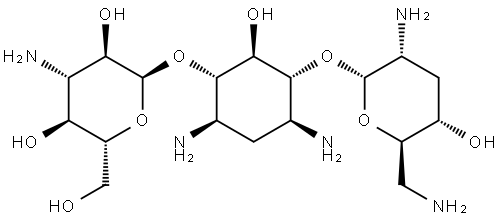
Tobramycin is an aminoglycoside antibiotic produced through fermentation by the bacterium Streptomyces tenebrarius, classified as a bactericidal antibiotic used in both human and veterinary medicine.
Basic Properties
CAS Number 32986-56-4
EINECS Number 251-322-5
Molecular formula: C₁₈H₃₇N₅O₉
Molecular weight 467.52
Physical properties: White to off-white solid (commonly used in its sulfate form).
Melting point: 178°C
Density: 1.52 g/cm³
Specific optical rotation: +129° (c = 1.0, H₂O)
Solubility: Highly soluble in water (1:1.5), slightly soluble in ethanol (1:2000), insoluble in chloroform and ether.
Storage conditions: Store in a dark, sealed container at a cool and shaded place (≤20°C).
Risk: Xi (irritating); R36/37/38 (irritates eyes, skin, and respiratory tract)
Pharmacological Mechanism
Tobramycin inhibits bacterial death by binding to the 30S subunit of the bacterial ribosome, thereby preventing the formation of the 70S complex and hindering mRNA translation into proteins.It is a bactericidal antibiotic (not an antibacterial agent).
antimicrobial spectrum
Gram-negative bacteria (primary targets): Pseudomonas aeruginosa, Escherichia coli, Klebsiella spp., Enterobacter spp., Proteus spp., Citrobacter spp., Serratia spp., Shigella spp., Salmonella spp., etc.
Gram-positive bacteria (partial): Staphylococcus aureus (including β-lactamase-producing strains)
Drug-resistant strains: Pseudomonas aeruginosa resistant to gentamicin may still be sensitive, with antibacterial activity 3–5 times stronger than that of gentamicin.
Insensitivity: Streptococcus, anaerobic bacteria (Bacteroides), Mycobacterium tuberculosis, Rickettsia, viruses, fungi
pharmacokinetics
Absorption: Rapid and complete absorption occurs after intramuscular injection; no absorption occurs when administered orally (no gastrointestinal absorption); topical application may result in certain amounts being absorbed through the skin.
Distribution: Primarily distributed in the extracellular fluid, with 5–15% redistributed to tissues and accumulating in the renal cortex; it can cross the placenta.
Metabolism: Not metabolized in the body
Excretion: Excreted via glomerular filtration, with 85–93% of the administered dose being eliminated within 24 hours.
Half-life: 1.9–2.2 hours (in patients with normal renal function)
Protein binding rate: <30%
Human Clinical Applications
Systemic infection (following injection administration)
Sepsis, neonatal sepsis
Central nervous system infection (meningitis, treatable with intrathecal injection)
Urinary and reproductive system infections
Pulmonary infection (may be treated with nebulized inhalation therapy)
Burn infection, skin and soft tissue infection
Abdominal infections (bile duct and gallbladder infections, peritonitis)
Ocular infection (local administration)
Bacterial conjunctivitis, keratitis
It is often used in combination with dexamethasone (e.g., Tobrex/TobraDex), with brand names including Tobrex.
Pulmonary infection (via nebulization)
Long-term suppression of Pseudomonas aeruginosa infection in cystic fibrosis patients (brand name TOBI)
Clinical Applications of Veterinary Drugs
Tobramycin does not have a dedicated veterinary drug product approved by the U.S. FDA in the field of veterinary medicine; however, it is widely used off-label as a human medication in veterinary clinical practice and serves as an important antimicrobial agent for animals.
Companion animals (dogs, cats)
Ocular infections: bacterial conjunctivitis, keratitis, blepharitis, secondary infection of corneal ulcers, and postoperative ocular infections (preventive treatment with 0.3% eye drops, 1–2 drops per application, 3–4 times daily).
Systemic Gram-negative bacterial infections: sepsis, urinary tract infections, skin and soft tissue infections, etc., particularly as an alternative therapy in cases of gentamicin-resistant bacterial infections.
Recommended dosage: 2 mg/kg for dogs and cats, administered intravenously (IV), intramuscularly (IM), or subcutaneously (SC) every 8 hours.
horse
Dosage: 1–1.7 mg/kg every 8 hours, intravenously (IV) or intramuscularly (IM).
poultry
Dosage: 5 mg/kg intramuscularly (IM), every 12 hours
reptiles
Dosage: 2.5 mg/kg, once daily by intramuscular injection (IM)
Animal Husbandry and Breeding
Porcine yellow diarrhea: The mortality rate decreased from 30% to 5%.
Swine edema disease: The incidence and mortality rates decreased by 40% and 60%, respectively.
Mammary mastitis: The incidence and recurrence rates were reduced by 70% and 80%, respectively.
Adverse Reactions and Precautions
Nephrotoxicity: The most common adverse reaction, typically caused by accumulation in the renal cortex, and is usually reversible upon discontinuation of the drug.
Otoxicity: vestibular toxicity (more pronounced with tobramycin) and auditory toxicity, which may be irreversible; cats are particularly sensitive to vestibular toxicity.
Neuromuscular blockade: High doses may cause skeletal muscle weakness and respiratory depression.
Contraindications: Contraindicated in patients with hypersensitivity to aminoglycosides; contraindicated in rabbits or rabbit-like animals (as it disrupts intestinal microbial balance).
Use with caution in patients with renal insufficiency, elderly animals, neonatal animals, and animals with dehydration/sepsis/fever.
Drug interactions: Do not mix with β-lactams in the same container (causing mutual inactivation); concomitant use with diuretics exacerbates ototoxicity; combination with other nephrotoxic/ototoxic drugs increases toxicity.
📌 sum up
Dimension Description
Drug Type: Aminoglycoside bactericidal antibiotics
Source: Fermentation product of Streptomyces tenebrarius
Core target: Gram-negative bacteria (particularly Pseudomonas aeruginosa)
Human indications: sepsis, meningitis, urinary tract/lung/burn infections, ocular infections
Veterinary indications: ocular infections in dogs and cats, systemic infections caused by Gram-negative bacteria; livestock farming (porcine yellow diarrhea, bovine mastitis, etc.).
Whether it is shared between humans and animals: Both human and animal applications have extensive clinical use.
Veterinary registration status: No FDA-approved veterinary products in the United States; clinical use beyond the approved indication; China has veterinary-grade formulations.
Core risks: nephrotoxicity, ototoxicity (primarily vestibular toxicity)
Formulation types: Injection, eye drops, ophthalmic cream, nebulized inhalation solution